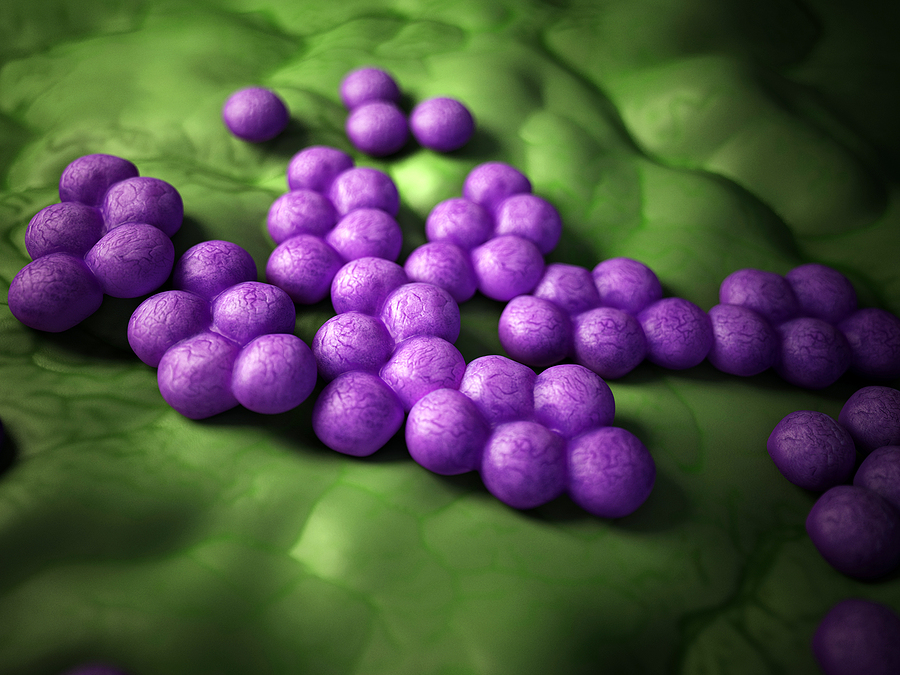
Staphylococcal scalded skin syndrome
A staph toxin, not the bacteria themselves, makes a young child's skin redden, blister and peel as though it has been scalded. It looks alarming, needs hospital treatment, and usually heals completely.
Written by David Roberts, editor · Updated
Checked against current CDC and IDSA guidance. Not medically reviewed. How we source this
What it is
Staphylococcal scalded skin syndrome (SSSS, sometimes called Ritter disease) happens when certain strains of Staphylococcus aureus release exfoliative toxins into the bloodstream. Those toxins target a protein that holds the outermost skin layer together, so the top layer separates over wide areas — far from wherever the actual bacteria are sitting.
The original infection is often trivial and easy to miss: a crusted nostril, sticky eye, infected umbilical stump, nappy-area sore or a small wound.
What it looks like
- Fever, irritability and a child who is clearly unwell and sore to touch
- Widespread redness, often starting around the mouth, eyes, nose and in skin folds
- Wrinkled-looking skin, then fragile blisters that burst easily
- Peeling in sheets, leaving raw, moist, red areas like a scald
- Crusting and radiating cracks around the mouth, though the inside of the mouth is spared
- Nikolsky sign — gentle sideways pressure on normal-looking skin makes it slide away
How it differs from other rashes
| Condition | How it differs |
|---|---|
| Bullous impetigo | Same toxins, but the blisters form only where the bacteria are. The child is usually otherwise well. |
| Toxic epidermal necrolysis | Usually drug-triggered, affects the mouth and eye membranes, and splits the skin at a deeper level. More dangerous. |
| Burn or scald | Follows a clear injury with a matching pattern, rather than starting in folds and around the face with fever. |
| MRSA rash | MRSA usually causes discrete lumps, abscesses or spreading cellulitis rather than widespread peeling. |
Diagnosis
Diagnosis is largely clinical, based on the appearance and the age of the child. Swabs are taken from likely sources — nose, eyes, umbilicus, throat, any wound — rather than from the peeling skin itself, which is usually sterile. Blood cultures are taken in babies and anyone very unwell. A skin biopsy is occasionally used to separate SSSS from toxic epidermal necrolysis.
Treatment
- Admission to hospital for most children, and for all babies
- Intravenous anti-staphylococcal antibiotics, switched to oral once improving
- An antibiotic that covers MRSA — such as vancomycin or clindamycin — where MRSA is suspected or locally common
- Fluids, because raw skin loses water and heat quickly
- Pain relief and gentle, non-adherent dressings; skin care like burn care
- Emollients as the skin re-forms
Steroids are not used, and antibiotics are not stopped early even once the peeling settles.
Recovery
Most children start improving within one to three days of antibiotics, and the skin heals in one to two weeks. Because the split is in the outermost layer, healing is usually scar-free. Adults with SSSS — rare, and mostly people with kidney failure or immunosuppression — do considerably worse and need intensive care more often.
Related reading
Frequently asked questions
What is staphylococcal scalded skin syndrome?
What causes scalded skin syndrome?
What does scalded skin syndrome look like?
Is scalded skin syndrome contagious?
How is scalded skin syndrome treated?
How is it different from impetigo?
Do children recover from scalded skin syndrome?
Can adults get scalded skin syndrome?
- NHS. Staphylococcal scalded skin syndrome (2023)
- CDC. Staphylococcus aureus infections (2024)
- Handler M.Z. & Schwartz R.A., Journal of the European Academy of Dermatology and Venereology. Staphylococcal scalded skin syndrome: diagnosis and management in children and adults (2014)
- DermNet NZ. Staphylococcal scalded skin syndrome (2023)
Symptoms hub
Overview of MRSA symptoms and day-by-day progression.
What does MRSA look like?
Bumps, boils, abscesses and cellulitis — every visual form.
MRSA rash
Does MRSA cause a rash? Look-alikes and how to tell them apart.
MRSA in the nose
Nasal carriage vs infection, swab testing and mupirocin treatment.
MRSA skin infection
Types, diagnosis, treatment, and when skin MRSA becomes dangerous.
MRSA boil
Deep, painful, pus-filled lumps and how they are drained.
MRSA cellulitis
Spreading deeper-skin infection and urgent warning signs.
MRSA folliculitis
Small pus-filled bumps around hair follicles and prevention.
MRSA pneumonia
Hospital, ventilator-associated and necrotising lung infection.
MRSA bacteremia
MRSA in the bloodstream — how it gets there and how it's treated.
MRSA sepsis
Can MRSA cause sepsis? Warning signs and survival rates.
Invasive MRSA
How MRSA reaches the bloodstream, lungs and bone.
MRSA test
PCR nasal swab, wound culture and susceptibility testing.
MSSA vs MRSA
Same bacterium, different antibiotic susceptibility.
Staph infection vs pimple
How to tell a normal pimple from a staph or MRSA skin lesion.
MRSA colonization
Carriers, nasal swabs, how long carriage lasts and when it is treated.
MRSA UTI
MRSA in the urinary tract — catheters, symptoms and treatment.
MRSA ICD-10 codes
B95.62, A49.02, Z22.322 and the sequencing rules for coders.
Can MRSA kill you?
Death rates by infection type, who is at risk and the warning signs.
Staph infection
Staphylococcus aureus infection overall — symptoms, spread and treatment.
What does a staph infection look like?
Every form on the skin, stage by stage, and the look-alikes.
Is a staph infection contagious?
How it spreads, how long for, and the school, work and sport rules.
Antibiotics for a staph skin infection
Which drugs cover staph and MRSA, course lengths and allergy options.